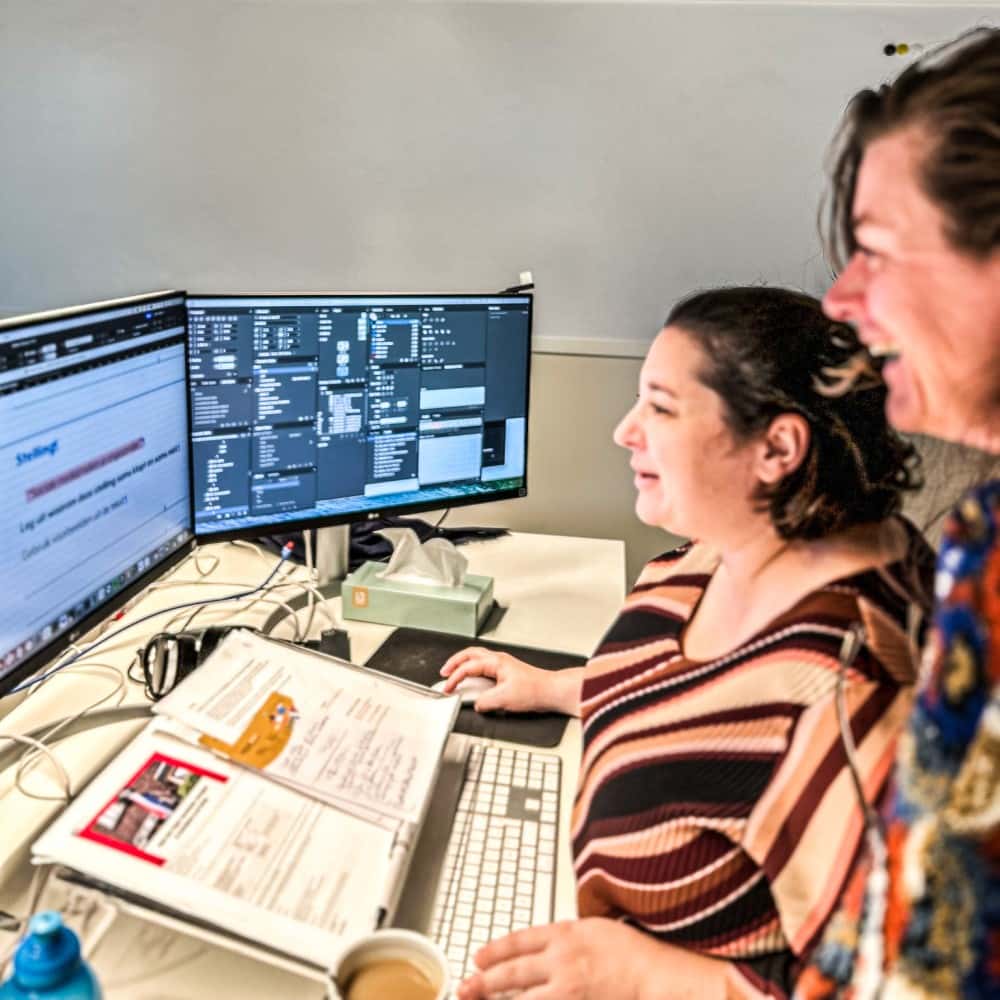
From raw manuscript to clean, structured, ready-to-typeset content.
Overview
Editorial work is where a title is de-risked before it enters production. Our editors read for sense, structure, and consistency, catching the issues that become expensive to fix later, and hand over content that flows straight into typesetting without rework. We serve trade, educational, academic, and professional publishers across EN, NL, FR, and DE.
Pain points we solve
What makes editorial hard to keep in-house.
Limited internal editorial capacity during peak seasons
Inconsistent house style across authors and titles
Structural issues discovered too late in the production chain
Process
How it works
From
Raw manuscript
To
Edited, structured content
Intake and assessment of the source manuscript
Structural and copy editing against your house style
Proofing and language correction
Hand-off of clean, structured content to typesetting
Correct grammar, spelling, style against house guide
What you receive
Clean copy-edited manuscript
Proofreading
What we do
Final check of formatted pages against edited text
What you receive
Marked-up proof or error list
Language correction
What we do
Native-language spelling and grammar pass in EN/NL/FR/DE
What you receive
Corrected text per language
Good to know
Copy editing
The process of reviewing and correcting a manuscript for grammar, spelling, punctuation, style consistency, and factual accuracy, while preserving the author's voice. Copy editing happens before layout or typesetting.
House style
A publisher's documented preferences for spelling, punctuation, capitalisation, and terminology, applied consistently across all titles to give a coherent editorial identity. Examples include choosing "Oxford comma" or specific spellings for contested words.
What is the difference between copy editing and proofreading?
Copy editing is applied to the manuscript before layout: it corrects grammar, spelling, punctuation, and style, and may address structure. Proofreading is a final check of the formatted pages against the edited text, catching typesetting errors and anything missed in earlier passes.
Why is manuscript structuring important before typesetting?
A consistently structured manuscript means the typesetting or XML workflow can be automated or templated. Without it, typesetters apply structure manually, which introduces inconsistency and makes multi-format output in print, ePub3, and XML much harder to produce from a single source.
Can a publisher outsource editorial work without losing quality control?
Yes, if the partner follows your house style guide, tracks all changes, and reports at each stage. Crius Group applies your style guide, returns tracked documents, and provides stage-by-stage sign-off, so you retain oversight without doing the work yourself.
Frequently asked questions
What editorial services does Crius Group offer?
We offer manuscript structuring, translation, proofing and editing, editorial coordination, and language correction (spelling and grammar) in EN, NL, FR, and DE.
Can you handle editorial work during peak seasons?
Yes. We are built to absorb volume during peak periods so your internal team is not the bottleneck, while maintaining turnaround and quality commitments.
Which types of publishers do you work with?
We work with trade, educational, academic, and professional publishers. Our workflows are designed to handle both high-volume series and complex multi-author titles.
How does your editorial work feed into typesetting?
Our editorial process produces structured, consistently tagged content. This means there is no reformatting step before typesetting. The file flows directly into the composition workflow, saving time and reducing errors.
Ready to start a production line?
Log in to the portal to submit a request, or reach out and we'll set things up together.